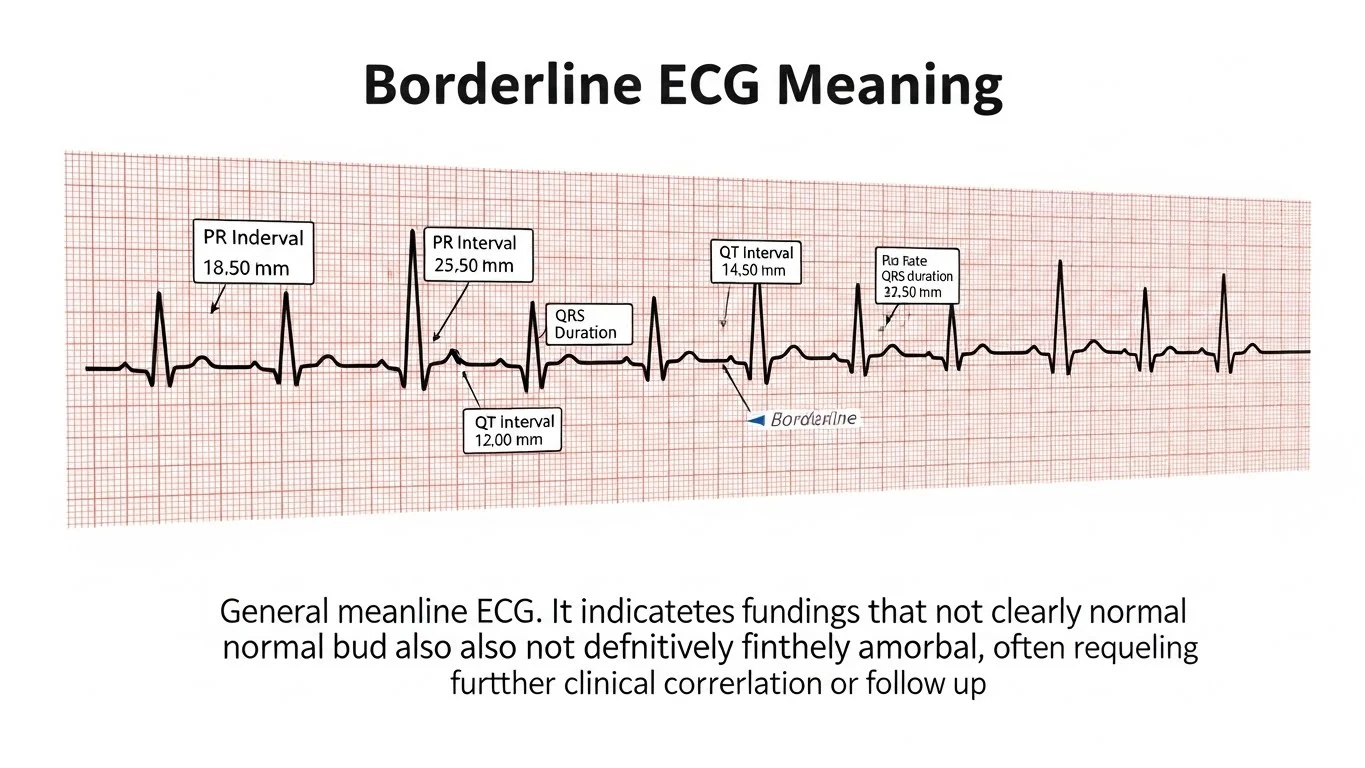
Getting medical test results can feel overwhelming—especially when the wording isn’t crystal clear. One phrase that often causes confusion (and anxiety) is when an ECG report comes back as borderline.
It sounds serious, but it’s not always bad news. In fact, many people with this result feel completely fine and live normal, healthy lives.
This article breaks everything down in plain, Gen-Z–friendly language. No medical jargon overload. Just clear explanations, real-life scenarios, and helpful context so you know what’s actually going on.
Quick Answer
A borderline ECG result means your heart’s electrical activity is slightly outside the typical range, but not clearly abnormal. It’s a gray area—not a diagnosis, not an emergency. Doctors usually look at symptoms, medical history, and sometimes order follow-up tests before deciding if it truly matters.
What an ECG Actually Measures (In Simple Terms)
An ECG (electrocardiogram) is a quick, painless test that tracks the electrical signals controlling your heartbeat.
It helps doctors see:
- How fast your heart is beating
- Whether the rhythm is regular or irregular
- If electrical signals are traveling normally through the heart
Think of it like a speed and wiring check for your heart.
What “Borderline” Means in Medical Reports
The word borderline doesn’t mean “dangerous.” It means:
- Slight variations from what’s considered textbook normal
- Changes that might be normal for you, depending on age, fitness, stress, or health history
- Findings that don’t clearly point to disease
Doctors use this label when results sit between normal and abnormal.
Important: Machines often auto-generate ECG interpretations. A human doctor always reviews them.
Common Reasons an ECG Can Look Borderline
There are many everyday reasons your heart tracing might land in the gray zone.
1. Stress and Anxiety
Nervous during the test? Totally normal.
- Stress can raise heart rate
- Anxiety can slightly alter rhythm patterns
2. Caffeine or Energy Drinks
That pre-test coffee?
- Can speed up heart rate
- Can cause minor rhythm changes
3. Dehydration
Low fluids = electrolyte imbalance.
- Sodium and potassium shifts affect heart signals
4. Athletic or Very Active Lifestyle
Fit people often have:
- Slower resting heart rates
- Electrical patterns that look “different” but are healthy
5. Medications
Some drugs can affect heart rhythms, including:
- Cold medicines
- Asthma inhalers
- Certain antidepressants
Does a Borderline Result Mean Heart Disease?
Short answer: Not necessarily.
Many people with borderline findings:
- Have no heart disease
- Never develop heart problems
- Don’t need treatment at all
Doctors look at the big picture, including:
- Symptoms (chest pain, dizziness, fainting)
- Family history
- Blood pressure and cholesterol
- Lifestyle factors
A single test result is rarely the final word.
Symptoms That Matter (And Ones That Usually Don’t)
More Concerning Symptoms
If these show up, doctors take a closer look:
- Chest pain or tightness
- Shortness of breath
- Fainting or near-fainting
- Palpitations with dizziness
Less Concerning or Common Symptoms
Often unrelated:
- Occasional fast heartbeat during stress
- Mild anxiety-related sensations
- Feeling tired after poor sleep
No symptoms? That’s usually a good sign.
What Doctors Usually Do Next
A borderline ECG doesn’t mean panic mode. It means confirmation mode.
Possible Next Steps
- Repeat ECG to see if changes persist
- Holter monitor (24–48 hour heart tracking)
- Echocardiogram (heart ultrasound)
- Blood tests to check electrolytes
Sometimes, doctors do nothing at all—just reassurance.
Real-Life Scenarios (So You’re Not Guessing)
Scenario 1: The Stressed Student
A college student gets tested during exams.
- ECG: borderline
- Cause: anxiety + caffeine
- Outcome: totally normal on repeat test
Scenario 2: The Gym Regular
A physically active adult with a low resting heart rate.
- ECG: flagged as borderline by machine
- Doctor review: normal athletic heart
Scenario 3: The Dehydrated Patient
Skipped water, hot weather, mild illness.
- ECG: minor rhythm changes
- Fix: hydration + electrolytes
Can a Borderline ECG Turn Normal?
Yes—and often it does.
Reasons it can normalize:
- Reduced stress
- Better hydration
- Medication adjustment
- Lifestyle improvements
Many follow-up ECGs come back completely normal.
Lifestyle Habits That Support Heart Health
Even if your result turns out to be nothing, heart-friendly habits are always a win.
Daily Heart-Smart Tips
- Stay hydrated
- Limit energy drinks
- Manage stress (yes, it matters)
- Get quality sleep
- Move your body regularly
Small changes = long-term benefits.
When to Take It Seriously
While most cases are harmless, pay attention if:
- Symptoms worsen
- You have a strong family history of heart disease
- The result stays borderline over multiple tests
That’s when deeper evaluation helps rule things out.
Myths You Should Ignore
Myth: Borderline means a heart attack is coming
Truth: It’s not predictive on its own
Myth: You need medication immediately
Truth: Most people don’t
Myth: One ECG defines your health
Truth: Doctors use trends, not single snapshots
Why ECG Machines Sometimes Over-Flag Results
ECG software is designed to be extra cautious.
- It flags anything slightly unusual
- It can’t see context like fitness or anxiety
- Doctors interpret the data more accurately
So yes—machines can be dramatic.
Final Thoughts: Don’t Panic, Get Context
A borderline ECG result is more of a conversation starter, not a conclusion. It tells doctors, “Let’s take a closer look,” not “Something is wrong.”
Most of the time, it leads to reassurance—not treatment. Stay informed, ask questions, and remember that your heart health is about patterns over time, not one test on one day.
