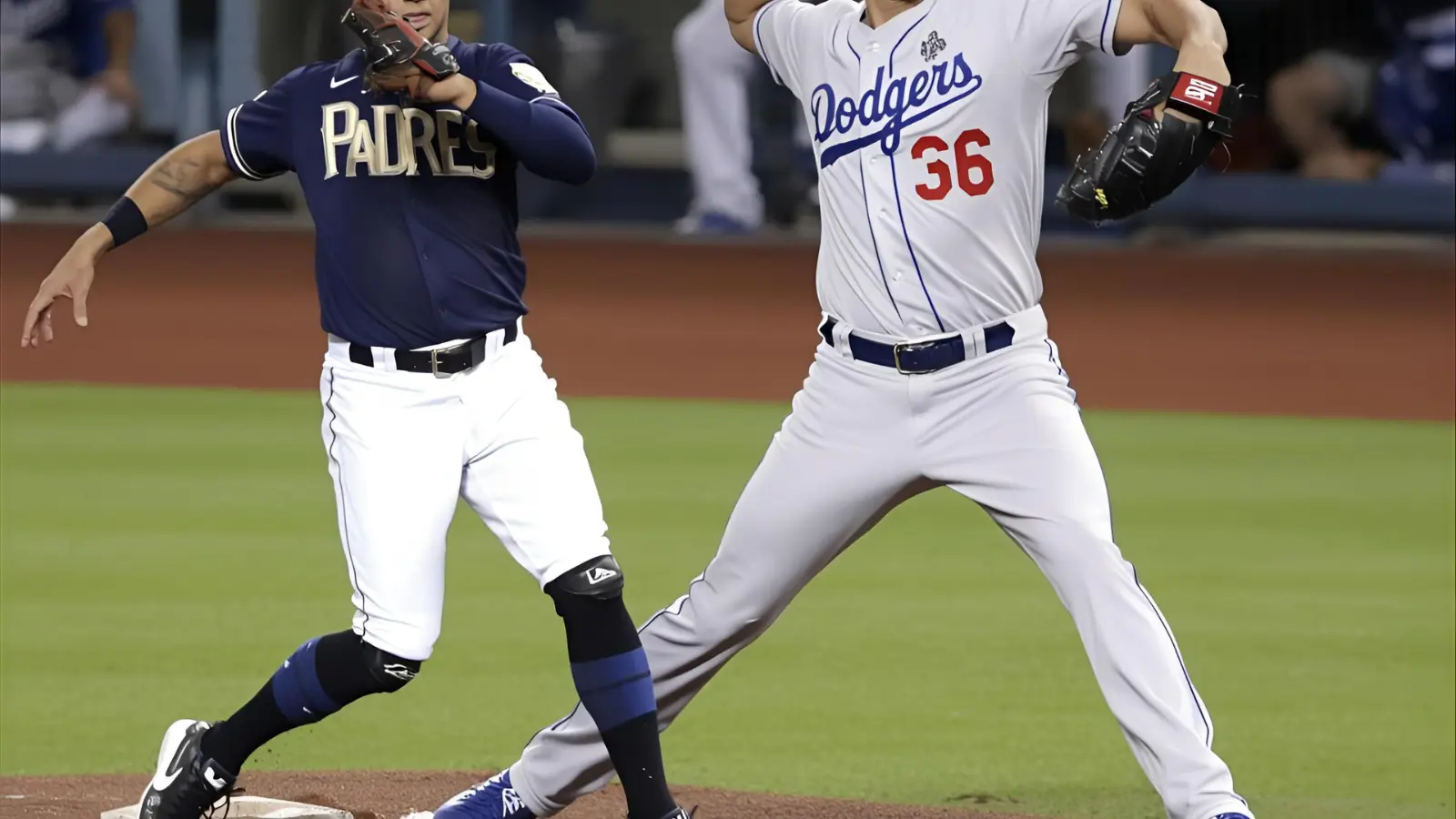
Few rivalries in Major League Baseball have gained momentum as rapidly as the Padres vs Dodgers saga. Once viewed as a one-sided California clash, it has transformed into one of the sport’s most compelling storylines — featuring big-budget dominance, underdog ambition, and historic postseason battles.
This article explores every layer of this modern MLB rivalry — from its origins and defining moments to the statistics, stars, and emotions that keep fans talking year-round.
1. Origins of the Padres vs Dodgers Rivalry ⚾
The Los Angeles Dodgers, one of MLB’s most decorated franchises, have a legacy that dates back to their Brooklyn roots in 1883. The San Diego Padres, meanwhile, joined the major leagues in 1969 as part of MLB’s expansion era.
For decades, the rivalry between the two teams was mild — the Dodgers’ dominance and the Padres’ struggles kept the matchups predictable.
However, the tides began to shift in the late 1990s. The Padres’ surprising run to the 1998 World Series — led by Tony Gwynn and Trevor Hoffman — sparked regional pride. Though the Dodgers remained a powerhouse, San Diego’s hunger for recognition planted the first seeds of competition.
By the 2010s, the rivalry gained fire. The Padres began investing heavily in talent, aiming to dethrone the Dodgers’ long-standing reign in the National League West.
2. Power Shifts and High Stakes
The turning point came during the 2020 MLB season, when the Padres emerged as one of the league’s most explosive teams. With Fernando Tatís Jr., Manny Machado, and a rising pitching rotation, they faced off against a Dodgers roster that boasted Mookie Betts, Clayton Kershaw, and Corey Seager.
The Dodgers ultimately claimed the 2020 World Series title, but the Padres’ emergence sent a message — the rivalry was real.
In 2022, that message grew louder. Despite the Dodgers’ 111-win regular season — one of the best in franchise history — the Padres eliminated Los Angeles in the NLDS, shocking the baseball world. That postseason victory marked a psychological shift: the Padres were no longer the little brother; they were contenders.
3. The Economic Divide: Payrolls, Markets, and Strategies 💰
A central element of the Padres vs Dodgers rivalry lies in their financial contrast.
The Dodgers, owned by Guggenheim Baseball Management, maintain one of MLB’s highest payrolls, consistently exceeding $250 million. Their budget allows them to attract elite talent, from Mookie Betts to Shohei Ohtani (projected acquisition impact).
The Padres, under owner Peter Seidler, took a bolder but riskier approach. Despite being a small-market team, San Diego poured resources into long-term contracts for Machado, Tatís Jr., Xander Bogaerts, and Yu Darvish.
This economic gamble earned both praise and criticism. Analysts argued that the Padres were challenging MLB’s financial hierarchy, while the Dodgers’ sustained success reflected organizational consistency rather than pure spending.
4. Player Matchups That Define the Rivalry 🌟
Every great rivalry thrives on its personal duels, and Padres vs Dodgers is no exception.
Let’s break down some of the key player matchups that have shaped the modern narrative:
Fernando Tatís Jr. vs Mookie Betts
Both are electrifying superstars. Betts embodies discipline and leadership; Tatís Jr. represents flair and youthful energy. Their highlight plays — from Betts’ diving catches to Tatís’ bat flips — symbolize the stylistic contrast between the franchises.
Manny Machado vs Freddie Freeman
Machado’s intense presence and clutch hitting have made him a Padres icon, while Freeman’s quiet dominance anchors the Dodgers lineup. Both bring veteran poise and postseason experience, turning each series into a chess match.
Yu Darvish vs Clayton Kershaw
These aces represent two generations of pitching excellence. Kershaw’s Hall of Fame résumé contrasts with Darvish’s adaptability and precision. Every duel between them draws massive attention from fans and analysts alike.
5. Statistical Breakdown: Dodgers’ Dominance vs Padres’ Progress 📊
The Dodgers have historically dominated the regular-season matchups. Through 2023, Los Angeles led the all-time series by a wide margin — over 520 wins to San Diego’s 400+.
Yet, the narrative has shifted in the postseason.
The Padres’ 2022 NLDS victory marked their first-ever playoff series win against Los Angeles. San Diego outscored the Dodgers 16–15 across four games, highlighting pitching depth and timely hitting as key differentiators.
In 2023 and 2024, despite roster changes, the Padres remained competitive, closing the gap statistically. Their offensive output improved by 12% in games against L.A., proving that the rivalry now stands on competitive rather than historical footing.
6. Fan Culture: Southern California Split in Two 💙💛
The emotional heart of the Padres vs Dodgers rivalry lies in its fans.
Southern California is a divided baseball region. The Dodgers, with their massive fanbase stretching from L.A. to Las Vegas, embody glamour and tradition. Meanwhile, the Padres represent a tight-knit, passionate, and defiant community determined to make San Diego a baseball capital.
At Petco Park, “Beat L.A.” chants echo through every home game, while Dodger Stadium roars with confidence whenever San Diego visits.
Social media has further amplified the rivalry — Twitter debates, viral memes, and highlight wars keep fans engaged even in the offseason.
7. Media Narratives and Public Perception 📰
Sports media has fueled the rivalry by framing it as a David vs Goliath story.
Analysts often portray the Padres as the bold upstart — willing to challenge the Dodgers’ empire through aggressive spending and swagger.
However, the Los Angeles media market tends to emphasize the Dodgers’ consistency, deep farm system, and championship pedigree.
The national narrative often asks: Can San Diego sustain its success long-term, or will Los Angeles reassert dominance?
This dichotomy keeps the rivalry relevant — it’s not just about games; it’s about reputation, pride, and the future of MLB competition.
8. The 2022 NLDS: A Turning Point in Rivalry History ⚔️
The 2022 National League Division Series between the Padres and Dodgers remains a defining chapter.
The Dodgers entered as overwhelming favorites, armed with 111 wins and sky-high expectations. Yet, the Padres displayed unmatched intensity — from Jake Cronenworth’s clutch hits to Trent Grisham’s postseason resurgence.
When San Diego clinched the series at Petco Park, the celebration was euphoric. It symbolized years of frustration transformed into triumph.
That moment established the rivalry as legitimate — not regional, but national. It also set the stage for an offseason of reflection for the Dodgers, who vowed to return stronger.
9. Managerial Philosophies: Roberts vs Melvin 🧢
Dave Roberts (Dodgers)
Known for his calm demeanor and tactical precision, Roberts emphasizes consistency and adaptability. His management style maximizes depth — leveraging analytics to handle the Dodgers’ rotation and bullpen effectively.
Bob Melvin (Padres)
Melvin, before moving to San Francisco in 2023, was admired for his player-first approach. His ability to manage egos, especially in a star-studded clubhouse, brought balance to the Padres.
Their contrasting styles — Roberts’ system vs Melvin’s intuition — defined the dugout dynamics of this rivalry.
10. The Farm System Battle: Future Foundations 🌱
While the Dodgers boast one of MLB’s most productive farm systems, the Padres have aggressively traded prospects to win now.
Dodgers’ Strategy
Los Angeles continues to develop elite prospects like Bobby Miller and Gavin Stone, ensuring longevity even with star departures.
Padres’ Approach
San Diego sacrificed prospects like CJ Abrams and MacKenzie Gore for established stars. While risky, the move positioned them for immediate contention — a strategy reflecting urgency over patience.
The long-term question remains: Which model will sustain success longer?
11. Economic and Cultural Impact on California
Beyond baseball, the Padres vs Dodgers rivalry influences California’s sports identity.
Economically, rivalry games generate millions in local tourism and merchandise sales, especially in San Diego. Culturally, it’s a point of civic pride — Padres fans embrace their underdog status, while Dodgers fans flaunt tradition and star power.
Television ratings spike during these matchups, and both cities benefit from the increased national spotlight the rivalry brings.
12. Stadiums and Atmosphere: Dodger Stadium vs Petco Park 🏟️
- Dodger Stadium (Los Angeles): The third-oldest ballpark in MLB, known for its history, sunsets, and enormous capacity. It represents legacy.
- Petco Park (San Diego): A modern marvel blending downtown energy with coastal aesthetics. It symbolizes renewal and ambition.
Every series alternates atmospheres — from Hollywood’s grandeur to San Diego’s beachside resilience. Each fanbase sees its stadium as sacred ground.
13. Social Media and Modern Rivalry Dynamics 📱
In the digital era, Padres vs Dodgers extends far beyond the diamond.
Players engage with fans directly through Instagram reels, TikToks, and interviews, giving personality to the rivalry.
Tatís Jr.’s flashy celebrations or Betts’ humble responses often ignite online debates that trend for days.
This online engagement has transformed the rivalry into a year-round conversation, where memes, reactions, and hot takes are part of the game.
14. Challenges Ahead: Roster Depth and Sustainability
While both teams remain contenders, challenges persist:
- The Padres face payroll pressure and must balance stars with sustainable depth.
- The Dodgers, meanwhile, navigate aging core players and constant postseason expectations.
Both front offices must innovate — through analytics, scouting, and smarter contracts — to stay ahead in a fiercely competitive league.
15. Predictions for the Future 🔮
The Padres vs Dodgers rivalry is poised to define the next decade of the National League West.
If San Diego can stabilize financially and retain its stars, they could consistently challenge Los Angeles. Meanwhile, the Dodgers’ combination of farm talent and market power ensures they remain perennial contenders.
Analysts predict that by 2026–2027, this rivalry could become MLB’s version of Yankees–Red Sox — a cultural and sporting phenomenon.
Conclusion
What once began as a one sided California rivalry has evolved into an MLB powerhouse feud that embodies ambition, identity, and evolution.
The Padres vs Dodgers saga is not just about who wins on the field — it’s about how two contrasting franchises represent different philosophies of building success.
The Dodgers stand for consistency, experience, and heritage, while the Padres symbolize boldness, belief, and the hunger to redefine baseball hierarchies.
In the years ahead, this rivalry promises drama, emotion, and history — the lifeblood of America’s greatest pastime.
